

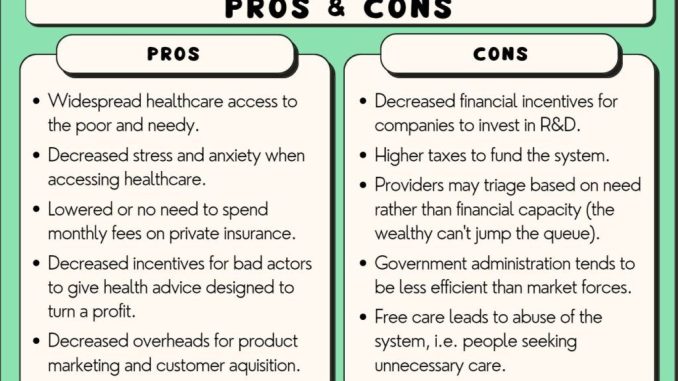
Universal healthcare is a hotly debated topic around the world, with proponents arguing that it ensures everyone has access to essential medical services and opponents raising concerns about the potential costs and quality of care. In this article, we will explore the pros and cons of implementing a universal healthcare system.
Pros of Universal Healthcare
1. Improved Access to Healthcare
One of the key advantages of universal healthcare is that it ensures that everyone has access to essential medical services, regardless of their income or employment status. This can lead to improved health outcomes and a reduction in health disparities.
2. Cost Savings
Universal healthcare can also lead to cost savings for both individuals and the government. By providing healthcare services to everyone, it can help prevent costly medical conditions from escalating and reduce the need for expensive emergency room visits.
3. Prevention of Medical Bankruptcy
One of the biggest benefits of universal healthcare is that it can prevent individuals from going bankrupt due to medical expenses. In countries with universal healthcare, people do not have to worry about being financially ruined by a serious illness or injury.
Cons of Universal Healthcare
1. High Costs
One of the biggest concerns about universal healthcare is the potential cost of implementing and maintaining such a system. Critics argue that the taxes required to fund universal healthcare can be prohibitively high, especially for low-income individuals.
2. Longer Wait Times
Another drawback of universal healthcare is the potential for longer wait times for non-emergency medical services. In countries with universal healthcare, patients may have to wait weeks or even months for elective procedures or specialist appointments.
3. Quality of Care
Some opponents of universal healthcare also raise concerns about the quality of care that patients receive. They argue that a government-run healthcare system may lead to a one-size-fits-all approach to treatment, potentially restricting access to cutting-edge medical technologies and treatments.
Conclusion
While universal healthcare has its advantages, such as improved access to healthcare and cost savings, it also has its drawbacks, including high costs, longer wait times, and concerns about the quality of care. Ultimately, the decision to implement a universal healthcare system should be carefully considered, taking into account the unique needs and priorities of each country.