

As technology continues to advance, our ability to monitor and track our health has never been easier. One important aspect of our health that can be easily monitored is our blood pressure. Understanding blood pressure readings is crucial in order to track your overall health and make informed decisions about your well-being.
What is Blood Pressure?
Blood pressure is the force of blood against the walls of your arteries as your heart pumps it around your body. It is measured in millimeters of mercury (mm Hg) and is typically recorded as two numbers, such as 120/80 mm Hg. The first number is known as the systolic blood pressure, which measures the pressure in your arteries when your heart beats. The second number is known as the diastolic blood pressure, which measures the pressure in your arteries when your heart is at rest between beats.
Healthy vs. High Blood Pressure
Healthy blood pressure is typically considered to be around 120/80 mm Hg. However, blood pressure can vary from person to person based on factors such as age, gender, and overall health. High blood pressure, also known as hypertension, is when the force of blood against the artery walls is consistently too high. This can lead to serious health issues such as heart disease, stroke, and kidney problems.
Understanding Blood Pressure Readings
When you get your blood pressure measured, it will be recorded as two numbers. Here is what those numbers usually mean:
Systolic Blood Pressure (Top Number): This is the pressure in your arteries when your heart beats. A normal reading is typically less than 120 mm Hg.
Diastolic Blood Pressure (Bottom Number): This is the pressure in your arteries when your heart is at rest between beats. A normal reading is typically less than 80 mm Hg.
Interpreting Blood Pressure Readings
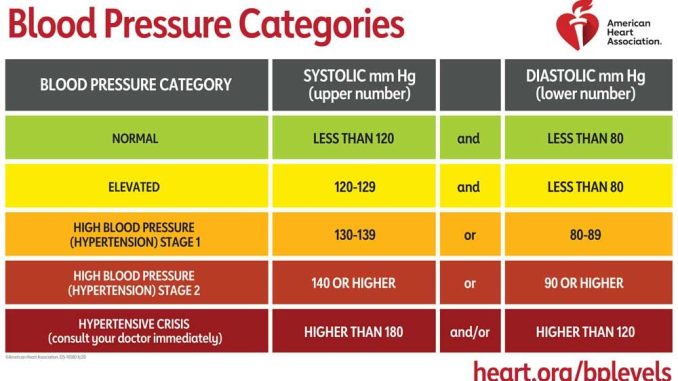
Here are the general categories for blood pressure readings:
Normal: Systolic less than 120 mm Hg and diastolic less than 80 mm Hg
Elevated: Systolic 120-129 mm Hg and diastolic less than 80 mm Hg
Stage 1 Hypertension: Systolic 130-139 mm Hg or diastolic 80-89 mm Hg
Stage 2 Hypertension: Systolic 140 mm Hg or higher or diastolic 90 mm Hg or higher
Tracking Your Blood Pressure
With the advancements in technology, it is easier than ever to track your blood pressure at home. There are a variety of blood pressure monitors available on the market that can give you accurate readings in the comfort of your own home. It is important to track your blood pressure regularly to monitor any changes and make adjustments to your lifestyle if needed.
Conclusion
Understanding blood pressure readings is crucial in order to track your overall health and make informed decisions about your well-being. By knowing what your blood pressure numbers mean and how to interpret them, you can take control of your health and make the necessary changes to live a healthier life.
Remember, if you have any concerns about your blood pressure readings, it is always best to consult with a healthcare professional for advice and guidance.